Step Off the Panic Button
How mindfulness helps us shift from stress to calm- no pills, no pressure

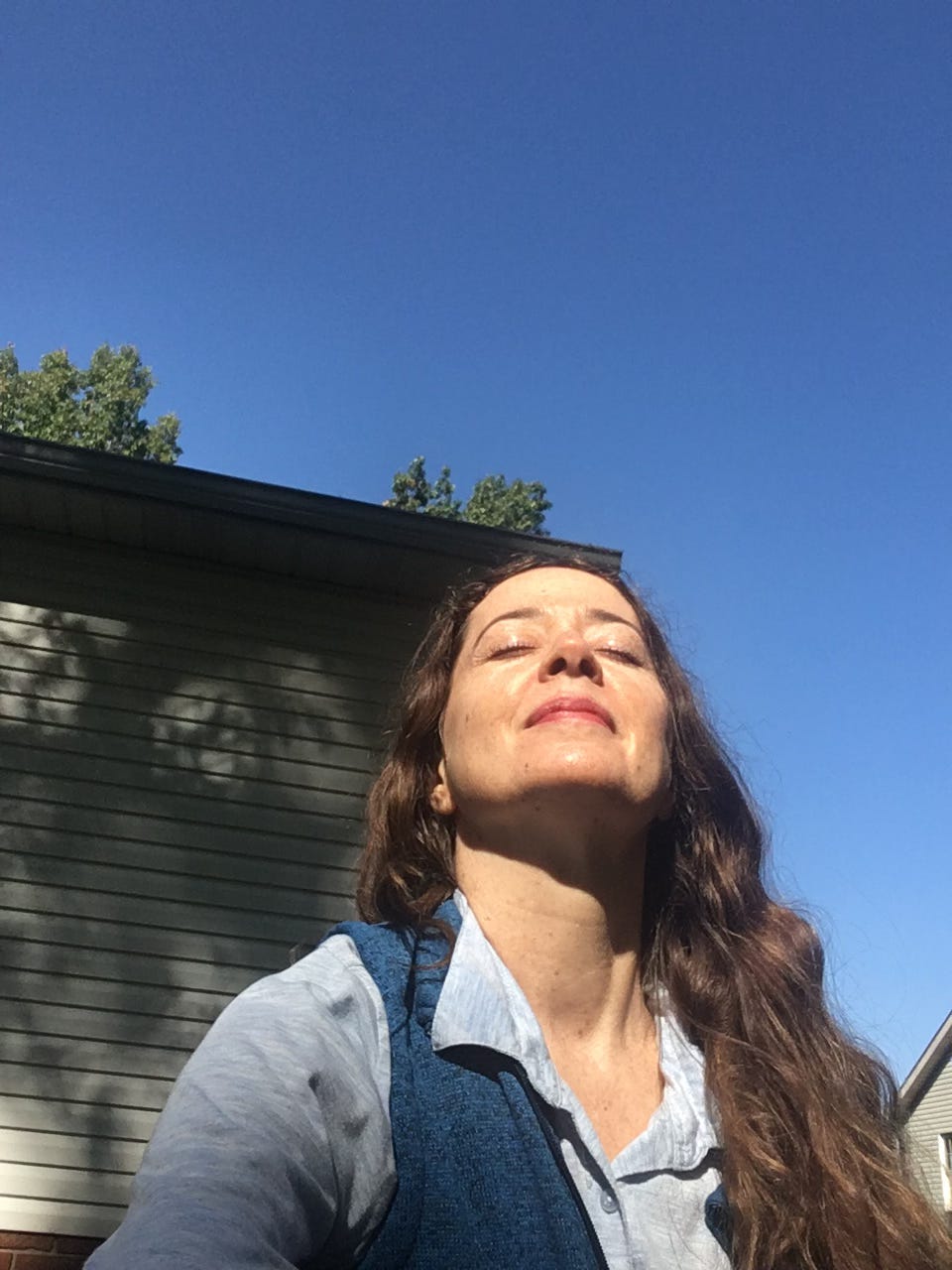
Why do I find so much joy in sharing mindfulness with others?
As a highly sensitive person, I am deeply aware — sometimes painfully so — of the overstimulation and chronic stress that surrounds us. Practicing mindful techniques has personally helped me avoid (or at least reduce my response to) that giant panic button that used to seem as big as me. Friends and clients also have thanked me for helping them improve their responses to stress and conquer the panic button.
When we compare our lives to those of 100 years ago, it’s astonishing how far civilization has come. Medical and technological advancements have given us longer life spans and, in many ways, an improved quality of life.
Yet at the same time, we are constantly exposed to news, social media, and information from every direction. Ironically, all of this “progress” often leaves us feeling overwhelmed, anxious, and exhausted.
The Key To Calm
Mindfulness offers a way back to ourselves.
At its core, mindfulness is the practice of bringing awareness to the present moment without judgment. As we strengthen our ability to focus on the now, we learn to turn inward and pause before reacting, soften our stress response, and meet life with calm.
Using mindful practices such as conscious breathing, forest bathing, and meditation, we can tap into our parasympathetic nervous system and shift from the “fight or flight” chaos mode into the “rest and digest” calm mode. When we engage this system, calming hormones are released, and the body is given permission to relax.
If we could get this from a pill, we would all take it.
But here’s the amazing truth people don’t realize:
we already have it.
It is a free gift available to all of us but the key is learning how to access it. By practicing mindfulness, we develop calming skills that we can utilize like tools in a tool box.
Chronic stress doesn’t just feel uncomfortable—it affects our health. Over time, it leads to:
high blood pressure
heart disease
insomnia
depression
Mindful practices, on the other hand, teach our nervous system a different response—one that lowers blood pressure, improves sleep, lifts mood, and enhances overall quality of life.
This Isn’t Just Theory
These practices are something I rely on in real moments that impact my life.
Recently, while waiting at the airport for my flight, I felt a sudden, sharp pain in my esophagus. I quickly realized that the food I ate in a rush trying to board on time had become stuck in my throat. I handed my computer to my husband and stood up, hoping movement would dislodge it. When that didn’t work, I took a sip of water, which only made the pain worse.
Panic set in.
I walked rapidly away from my seat, my heart racing, my body beginning to sweat. I found myself standing in front of a trash bin, terrified by the thought that I might lose my lunch in full view of a crowded airport. The embarrassment alone sent another wave of panic through me.
And then it dawned on me: the only way out of this situation wasn’t force, but calm.
I gently talked myself into taking my fist off the panic button and tapping into my parasympathetic system. I turned my attention inward, focused on my breath, and consciously invited my body to relax. I allowed calming thoughts to replace the panic, and slowly, my muscles softened. Within moments, the food dislodged, the pain was gone, and I confidently boarded the plane, excited for my next journey.
In that moment, mindfulness gave me exactly what I needed — a toolbox to calm my panic and shift my nervous system into “rest and digest” mode.
You Can Join Me
To start honing the tools in your toolbox, I recommend that you experiment with different breathing techniques to find out which one works best for you. The parasympathetic system works quietly and automatically in the background, but we can influence it, especially through the breath. One example is called “cyclic sighing.” In this example, breathe in through the nose while expanding the belly, pause, then continue inhaling through the nose while completely filling the lungs. Then slowly exhale through the mouth. Repeat this activity for just 5 minutes each day.
Finding your special breathing technique that gives you calm, peace, and clarity will do more than just save you from an inconveniently-timed panic attack. This hormone reset will also improve your quality of life on a daily basis. Research has shown that 5 minutes daily of cycling sighing, for example, effectively reduces anxiety, improves mood, lowers respiratory rate, and promotes peacefulness (1).
This is why I love teaching mindfulness. It empowers people, especially women like me who have spent decades caring for others, to reconnect with their own bodies and inner wisdom. It reminds us that calm is not something out of reach. It’s something we can cultivate from within.
If mindfulness has found you later in life, you’re not behind. You’re right on time. I look forward to sharing more of what I’ve learned over decades of studying and implementing mindful techniques for myself and my clients. In this space, I’ll be sharing simple, evidence-based practices that support a healthy nervous system and a longer, calmer, more connected life.
“It is only when we stop that we encounter life. When we stop, body and mind can reunite, and then we can experience their oneness.” -Thich Nhat Hanh
If you enjoyed this article and found it useful, please hit like, share and restack so I can reach as many as possible with this information.
Also, please feel free to comment. I would love to hear from you!
Reference:
https://med.stanford.edu/news/insights/2023/02/cyclic-sighing-can-help-breathe-away-anxiety.html#:~:text=Feeling anxious?,overall physiology and stress response.